


Despite unavoidably being reminded of my significant age advantage during their show, almost two weeks ago, at Coco66 in Greenpoint, Twin Sister (download a free four song EP also) are indeed something to experience live. Here's my FlipVideo of one of my current fave songs: "I Want a House".
Another video clip, this one not my own, is worth a look, too. Thank heavens, The National are finally putting out a new album this year. Here is the first song, "The Terrible," I've heard/saw. And we have (unfortunately, because, as I've previously made clear, I hate him) Jimmy Fallon to thank. And BrooklynVegan, for that matter.
Friday, March 19, 2010


Tuesday, March 16, 2010
Capital punishment proponents and opponents agree: Isn't it ironic?

Don't you think? So says NPR, anyway.
Ohio is about to execute a man who, last week, was brought to a hospital to be revived after attempting suicide. Why bother? you ask. Good question.
Ethics aside, lawmakers in some states are reconsidering the efficiency of the death penalty. It costs less to try and convict someone of murder who might get a life sentence, rather than going for capital punishment.
 (I realize this pic alludes to the electric chair, which as far as I know isn't used anymore, though still legal in some states if the prisoner chooses it--yeah right, like that will happen--but I had no gurney photos.)
Thursday, March 4, 2010
I grew up reading The Washington Post
And I grew up listening to my father rant, while religiously reading the thing, that the Post was just another liberal rag, on par with the holiest of holies, The New York Times.
Well, apparently nothing lasts for ever--if it ever happened in the first place. Like most candy-colored "things that used to be so great" nostalgia--you know, when America was America for Americans, capitalism was "free" and government was "small"--that never were (not the way people that use them mean them), this never existed.

Anyway, now they've run afoul of the rightist-watching Media Matters:
"The Washington Post just hired Marc Thiessen, who now becomes the second former George W. Bush speechwriter-turned-columnist at the paper. Thiessen isn't just any right-wing shill: He's an unapologetic advocate for torture. And he isn't alone. Charles Krauthammer, Michael Scheuer, and Richard Cohen have all used the editorial pages of the Post to defend torture.
"In his book and even on the pages of the Post, Thiessen has repeatedly made dishonest and dubious statements in support of torture. For example: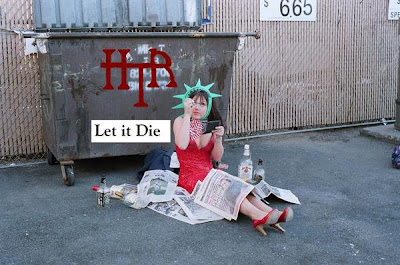
Well, apparently nothing lasts for ever--if it ever happened in the first place. Like most candy-colored "things that used to be so great" nostalgia--you know, when America was America for Americans, capitalism was "free" and government was "small"--that never were (not the way people that use them mean them), this never existed.

Anyway, now they've run afoul of the rightist-watching Media Matters:
"The Washington Post just hired Marc Thiessen, who now becomes the second former George W. Bush speechwriter-turned-columnist at the paper. Thiessen isn't just any right-wing shill: He's an unapologetic advocate for torture. And he isn't alone. Charles Krauthammer, Michael Scheuer, and Richard Cohen have all used the editorial pages of the Post to defend torture.
"In his book and even on the pages of the Post, Thiessen has repeatedly made dishonest and dubious statements in support of torture. For example:
- He falsely claimed in his most recent book that, since CIA interrogation of terror suspects began after 9-11, there were no attacks by Al Qaeda on U.S. interests at home or abroad.
- He also claimed, falsely, in a Post op-ed that Bush oversaw "2,688 days without a terrorist attack on [American] soil," ignoring the anthrax mail attacks, the El Al shooting in Los Angeles and other domestic terrorist attacks.
- In a Post op-ed, he called President Obama's decision to release Bush administration torture memos "irresponsible" and claimed that "Americans may die as a result.""

Friday, February 19, 2010
But what if you were too fat, Kevin?

Huh? What if you were?
Future Tense: http://www.elabs7.com/ct.html?
Thursday, February 11, 2010
What's that? Global warming a hoax, you say?

JIC (just in case) it seemed my snowy post yesterday implied that the blizzard somehow disproves global warming, let me clarify. As Colbert aptly pointed out, a blizzard (or even two! like in DC) does not a hoax make, just as the night does not imply the sun's death. My point, only vaguely conceptualized at the time, was that Pollyannaish-disbelief in global warming because of the weather outside is as irrational as the IPCC's (Intergovernmental Panel on Climate Change) contention that the sky is falling in the next couple of decades.
That, and, where the transition to renewable/sustainable energies from soon-to-be-gone (goggle: peak oil) fossil-fuels as an issue of pragmatic resource allocation and thus world security and political stability is concerned, there's a convergence of me and the Sex-Master.


(All pics of feral houses in Detroit. Thanks Flavorwire.com)
Wednesday, February 10, 2010
Since there's a blizzard on.

Increasing non-fossil fuel electricity generating capacity is to:
1. reduce the dependence on non-renewable energy sources and
2. reduce pollutions from say burning coals, but
3. NOT to deal with IPCC's religious bleif of global warming.
Recommend (5)
Wednesday, January 20, 2010
A shining moment in the marriage of culture and commerce.
Edgar Allan Poe, born in Boston in 1809. When he was two, both his parents died from tuberculosis. Poe lived most of his life in poverty and sometimes in misery. He would work and work on a poem only to sell it to a newspaper for a few dollars. In 1836, Poe married his 14-year-old cousin, Virginia Clemm. She was sick with tuberculosis, and they had no money to pay for heat so Poe trained their cat to sit on her lap to keep her warm. Virginia's mother lived with the couple as well, and Poe was trying to care for them both with almost no money. When he did get money, he often spent it on alcohol. His biggest problem was that he wasn't paid enough money for what he wrote; in 1845, he sold the poem 'The Raven' to a newspaper for $15.
-The Writer's Almanac

Douchie Poe fans have a mock funeral in recompense for his dying drunk on a Baltimore street.
More proof that pot will save the world.

In this case, a correlative activity, watching TV, as opposed to those associated with alcohol or uppers, can be beneficial to society.
This little ditty is from SeedMagazine.
"With all the negative impacts of TV, it might make you wonder whether TV offers any benefits at all. The pseudonymous neuroscience blogger “Neurocritic” found one studyshowing a benefit of television: People say they’re less lonely when they watch. As with the Dunton study, this is just a self-reported correlation, but if TV really makes people less lonely, that’s inarguably a plus.
But there may be more tangible benefits to TV, especially in developing nations. Daniel Hawes, a PhD candidate in applied at the University of Minnesota, discusses a study of a thousand villages in Tamil Nadu, India. The researchers found that shortly after the introduction of TV into a village, the standing of women improved dramatically. Villagers were more likely to say it was wrong for a husband to beat his wife, and women had greater autonomy and lower rates of pregnancy.
This makes some sense—in the US, the women’s liberation movement of the 1960s and 70s followed shortly after the nation-wide explosion of television ownership in the 1950s. It’s quite conceivable that TV’s power to induce social change—by giving people more access to information—is universal.
Paradoxically, while TV may be harmful to an individual’s mental and physical well-being, on the aggregate it could be beneficial to society. Perhaps, as with so many other things, the best advice might be to watch TV—but only in moderation. For more on the impact of TV and other technologies, visit ResearchBlogging.org."
The org mentioned, while not visually stimulating, has some interesting posts.
Sunday, January 17, 2010
I say we put Pat Robertson and Rush in boat going to Haiti.
Could argue that to understand the want of relative deprivation necessitates the acknowledgement, acceptance of relative privilege.

"Pat Robertson told his audience in the wake of the earthquake the "true story" that Haiti "swore a pact to the devil" to get "free from the French" and "ever since, they have been cursed." You heard that right. According to Robertson, the Haitian people are cursed and were hit by this horrible disaster because they made a pact with the devil for their freedom." - Media Matters
Kind of makes the Xmas day "underwear bomber" not seem so terror-fying. If there is a god, to quote a friend, "what an asshole."
UN guy: "Exactly what Haiti doesn't need, after all it's been through."
The really fucked-up thing is this might be the only thing that might make the city better. The chance to rebuild seemingly more significant than New Orleans, after Katrina. There will be more resources pouring into the place than ever have, or would, before now. The hurricanes, weather-related or political, of Haiti haven't brought out such an apparently immense response. This seemingly could be on par with a full scale invasion. If the government, only hanging on by a thread before the quake, is undone, the US/UN will have to take over. Martial law could be instated, suspending the country's constitution. This could be parlayed into calls for a constitutional convention of some sort that would be a proxy for installing an even more international friendly government, with US/UN troops remaining for some time.
Nation building anyone? We're doing a bang up job in Iraq and Afghanistan (that's only half sarcasm, and half hope). Though, to my knowledge there's no insurgency in Haiti--yet. And like Katrina, there's a mass exodus of the, presumably, poorer residents of the city.
Some semblance of normalcy, says Clinton. But maybe their normal shouldn't be returned to them, why not make it better?
IMF dude seems to agree, he says "something totally new...at the national level" is needed and the "piece meal approach...is not enough to get rid of the problems of the country."
Last time US troops in Haiti on this scale?
Don't quite get the bodies in the road to protest a slow response, almost ironic.
Thursday, December 24, 2009
I grew up off Ardennes Ave in a neighborhood with WWII themed street names. Built for vets. Yeah.

From The Writer's Almanac, earlier this month:
It was on this day in 1944 that the Battle of the Bulge began. It took place in the Ardennes forest, a snowy mountainous region of Belgium, France, and Luxembourg and lasted for more than a month. It was the last major German offensive, and it was the bloodiest battle of World War II for Americans troops. While estimates about the number of American casualties differ, the U.S. Defense Department lists 19,000 killed, 47,500 wounded, and 23,000 missing.
Among those taken as prisoner of war by the Germans was a young infantry scout named Kurt Vonnegut. He'd only been in the front lines for five days when he got trapped behind enemy lines and taken prisoner. Within a month, he was sent over to Dresden and put to work in a factory producing vitamin-enriched malt syrup for pregnant women. He and his fellow American prisoners were detained in and slept at an underground warehouse in Dresden that had been a meat-packing facility and storage locker before the war. The building was marked 'Schlachthof-funf': 'Slaughterhouse-Five.'
Then, in February 1945, about two months after the Battle of the Bulge began, British and American forces started firebombing Dresden. The firestorm created by the massive Allied bombings killed nearly all of Dresden's residents, but Vonnegut and other POWs survived because they were three stories underground, in that meat-storage locker.

Vonnegut published his novel Slaughterhouse-Five in 1969, a quarter century after he was captured at the Battle of the Bulge and a witness to the Dresden firebombing. In it, he wrote:
'It is so short and jumbled and jangled, Sam, because there is nothing intelligent to say about a massacre. Everybody is supposed to be dead, to never say anything or want anything ever again. Everything is supposed to be very quiet after a massacre, and it always is, except for the birds.
And what do the birds say? All there is to say about a massacre, things like 'Poo-tee-weet?'
The Battle of the Bulge ended on January 25, 1945, after Hitler agreed to withdraw German troops from the Ardennes forest. Less than two weeks later, Allied leaders met at Yalta to discuss occupying post-war Germany.

The New York Times:
When Theodore Roosevelt was president, three decades before World War II, the world was focused on the bloody Russo-Japanese War, a contest for control of North Asia. President Roosevelt was no fan of the Russians: “No human beings, black, yellow or white, could be quite as untruthful, as insincere, as arrogant — in short, as untrustworthy in every way — as the Russians,” he wrote in August 1905, near the end of the Russo-Japanese War. The Japanese, on the other hand, were “a wonderful and civilized people,” Roosevelt wrote, “entitled to stand on an absolute equality with all the other peoples of the civilized world.”
Roosevelt knew that Japan coveted the Korean Peninsula as a springboard to its Asian expansion. Back in 1900, Roosevelt had written, “I should like to see Japan have Korea.” When, in February 1904, Japan broke off relations with Russia, President Roosevelt said publicly that he would “maintain the strictest neutrality,” but privately he wrote, “The sympathies of the United States are entirely on Japan’s side.”
In June 1905, Roosevelt made world headlines when — apparently on his own initiative — he invited the two nations to negotiate an end to their war. Roosevelt’s private letter to his son told another story: “I have of course concealed from everyone — literally everyone — the fact that I acted in the first place on Japan’s suggestion ... . Remember that you are to let no one know that in this matter of the peace negotiations I have acted at the request of Japan and that each step has been taken with Japan’s foreknowledge, and not merely with her approval but with her expressed desire.”
Years later, a Japanese emissary to Roosevelt paraphrased the president’s comments to him: “All the Asiatic nations are now faced with the urgent necessity of adjusting themselves to the present age. Japan should be their natural leader in that process, and their protector during the transition stage, much as the United States assumed the leadership of the American continent many years ago, and by means of the Monroe Doctrine, preserved the Latin American nations from European interference. The future policy of Japan towards Asiatic countries should be similar to that of the United States towards their neighbors on the American continent.”
In a secret presidential cable to Tokyo, in July 1905, Roosevelt approved the Japanese annexation of Korea and agreed to an “understanding or alliance” among Japan, the United States and Britain “as if the United States were under treaty obligations.” The “as if” was key: Congress was much less interested in North Asia than Roosevelt was, so he came to his agreement with Japan in secret, an unconstitutional act.
To signal his commitment to Tokyo, Roosevelt cut off relations with Korea, turned the American legation in Seoul over to the Japanese military and deleted the word “Korea” from the State Department’s Record of Foreign Relations and placed it under the heading of “Japan.”
Roosevelt had assumed that the Japanese would stop at Korea and leave the rest of North Asia to the Americans and the British. But such a wish clashed with his notion that the Japanese should base their foreign policy on the American model of expansion across North America and, with the taking of Hawaii and the Philippines, into the Pacific. It did not take long for the Japanese to tire of the territorial restrictions placed upon them by their Anglo-American partners.
Japan’s declaration of war, in December 1941, explained its position quite clearly: “It is a fact of history that the countries of East Asia for the past hundred years or more have been compelled to observe the status quo under the Anglo-American policy of imperialistic exploitation and to sacrifice themselves to the prosperity of the two nations. The Japanese government cannot tolerate the perpetuation of such a situation.”
Saturday, December 5, 2009
"Nobel Peace Prize President Obama Calls For More War"
- OfficialWire headline. This guy's kind of a nut, but he's got some stuff dead on.
A paraphrase of a quote:
History may not repeat itself, but it does seem to rhyme.
-The New Yorker
The original:
It is not worthwhile to try to keep history from repeating itself, for man's character will always make the preventing of the repetitions impossible.
- Mark Twain in Eruption

(Yeah, okay, it's not the right Pope; sue me.)
It was on [November 30] in 1095 that Pope Urban II, while on a speaking tour in France, called for the first Crusade to recapture Jerusalem from the Turks. There was no imminent threat. Muslims had occupied Jerusalem for hundreds of years. But Urban II had noticed that Europe was becoming an increasingly violent place, with low-level knights killing each other over their land rights, and he thought that he could bring peace to the Christian world by directing all that violence against an outside enemy. So he made up stories of how Turks in Jerusalem were torturing and killing Christians, and anyone who was willing to join the fight against them would go to heaven.

About 100,000 men from France, Germany, and Italy answered the call, formed into several large groups, and marched across Asia Minor to the Middle East. Nearly half of them died from exhaustion and sickness before they ever reached their destination. They began sacking cities along the way, and they fought among each other for the spoils of each battle. When they reached the trading city of Antioch, they killed almost everyone, including the Christians who lived there. By the time they got to Jerusalem, it had recently fallen into the hands of Egyptians, who were friendly with the Vatican. But the crusaders attacked anyway, killing every Muslim they could find. The Jews in the city gathered in the temple, and the crusaders set it on fire. Pope Urban II died two weeks later, never hearing the news.
-The Writer's Almanac

You've got your tax cuts in my bailout! (or: Where's My Bailout?)

Comments posted to an article in The Nation about unemployment and the White House's jobs summit thing:
Joblessness? What's the big deal? Why don't we just spend 100 trillion dollars and pay everyone in America $1,000,000 per year! Problem solved!
Isn't liberal economics fun?
-Posted by pontificus at 12/02/2009 @ 09:09am
Or cut 100 trillion in taxes to Steve Forbes and Citgo...and we can all get jobs writing for a magazine or working on an oil rig?
Isn't conservative economics fun?
-Posted by Mask at 12/02/2009 @ 09:26am
look at post #2 and #3...this is essentially the nation anonymous web postings boiled down to two opposing sides...
and this is how we rant, over and over and over, forever...
it's a wonderful life!
-Posted by urmygyro at 12/02/2009 @ 09:30am
Subscribe to:
Posts (Atom)
Sex-master wrote: